The balance of the sexes
By Teri Casiokola·AMISFIELD, 5th April 2026
Last Friday’s Courier carried a jumbled array of stories in which, like busses, 3 similar stories arrived at the same time. There was a regenration plan from the Dumfries Town Board, a city of culture poprosal from DPAG and another “let’s link up with the borders” heritage thingy.
The thing that caught my eye in the Town Board’s report was the imbalance between the sexes. Women make up 52.15% of the town’s population, men 47.85% — a gap of 4.3 percentage points. The usual explanation is age: women live longer, so an older population skews female. But 4.3 points is a wide gap, wider than ageing alone tends to produce.
There’s another factor worth considering. More women than men go into higher education, which should mean Dumfries losing young women in their late teens and early twenties to university towns — and university towns tend to keep the students they attract, often for a decade or more. The report’s data isn’t broken down by age and gender, so I can’t see whether that outflow is happening here. Which leaves an interesting question: is our population even older than the headline figures suggest, or are young women in Dumfries not leaving for further education in the first place?
Public data exists for Dumfries & Galloway, so I went looking. We know the region’s population is declining while the town of Dumfries itself is growing. Are people moving within the region to reach work and services in Dumfries? Are people moving in from outside D&G? Almost certainly both — the more interesting question is in what proportions, and who they are. I know that Dumfries is a university town now, but not at the same scale of incoming students as one of the Scottish cities.
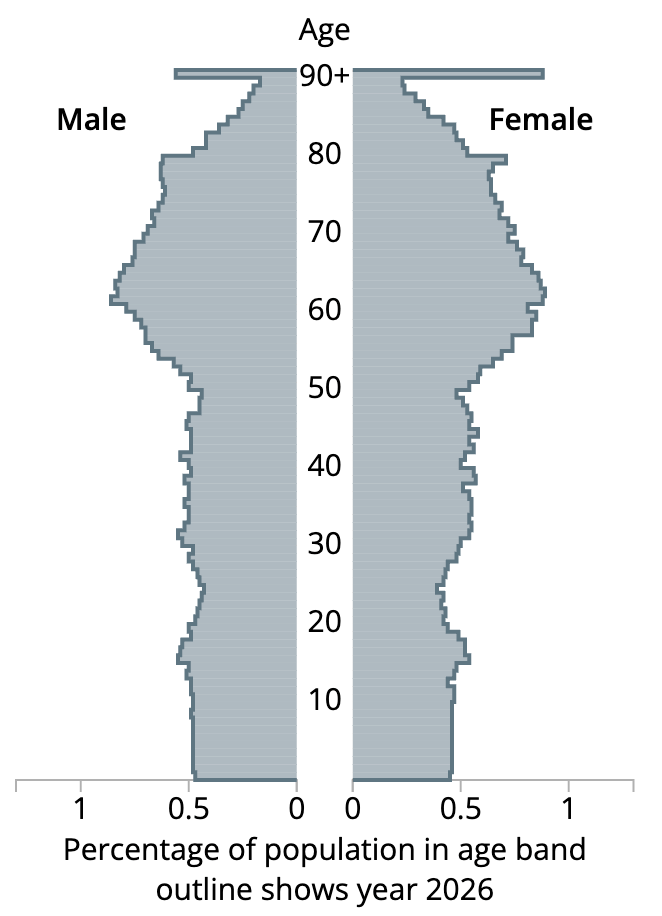
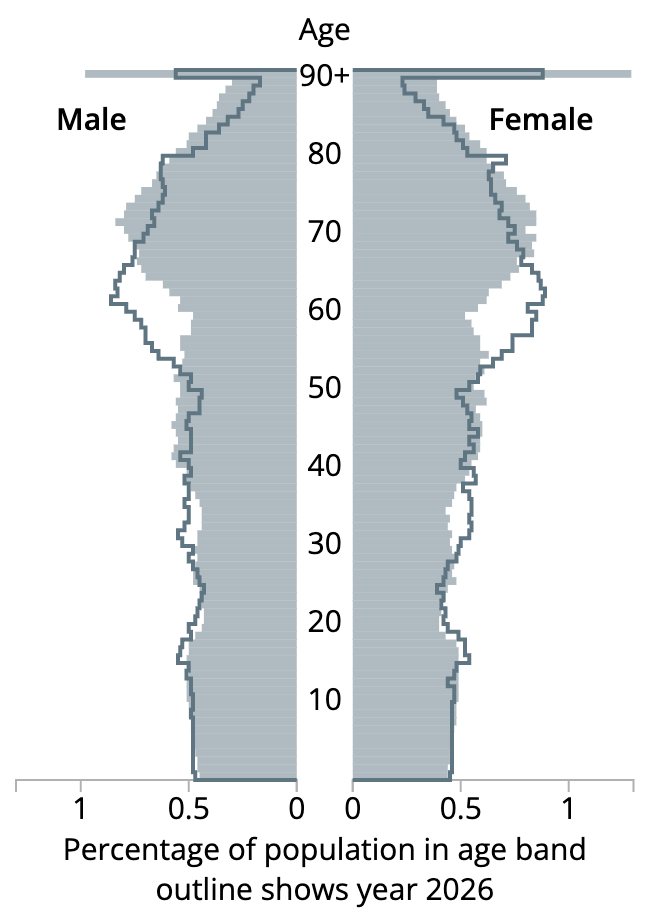
Here we see the difference between D&G (left) and Dundee (right). This is 1996 data and the solid border shows the situation in 2026.
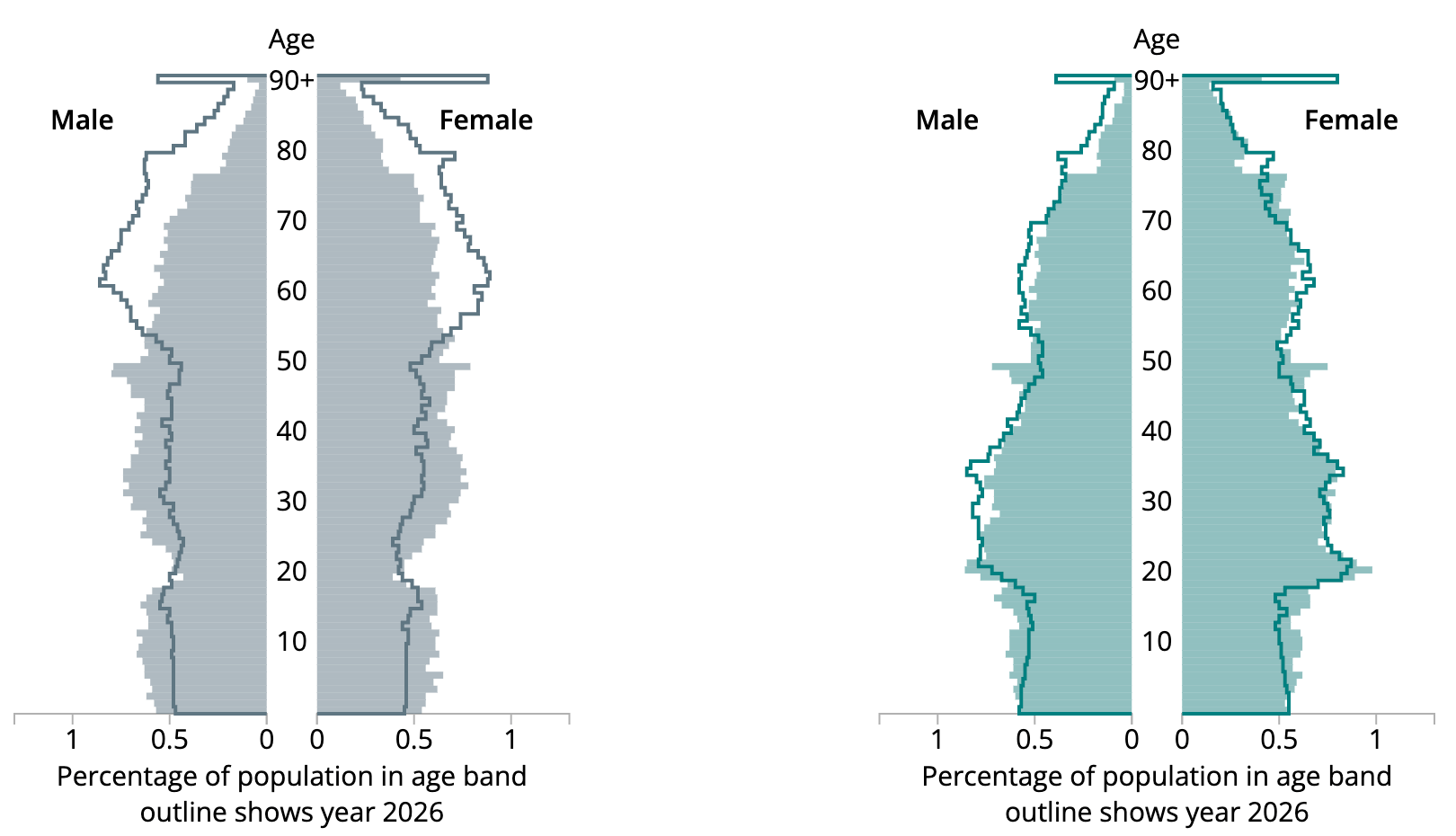
Dundee, a university town attracts young people as evidenced by the horizontal bulge around the 20 year old mark. Conversely, Dumfries contracts around the 20 year old mark.
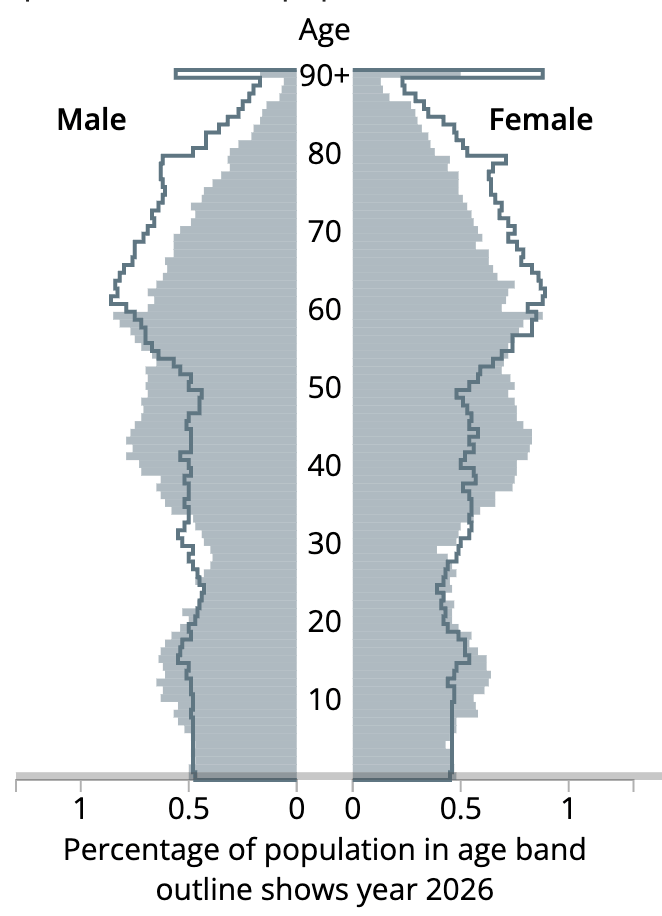
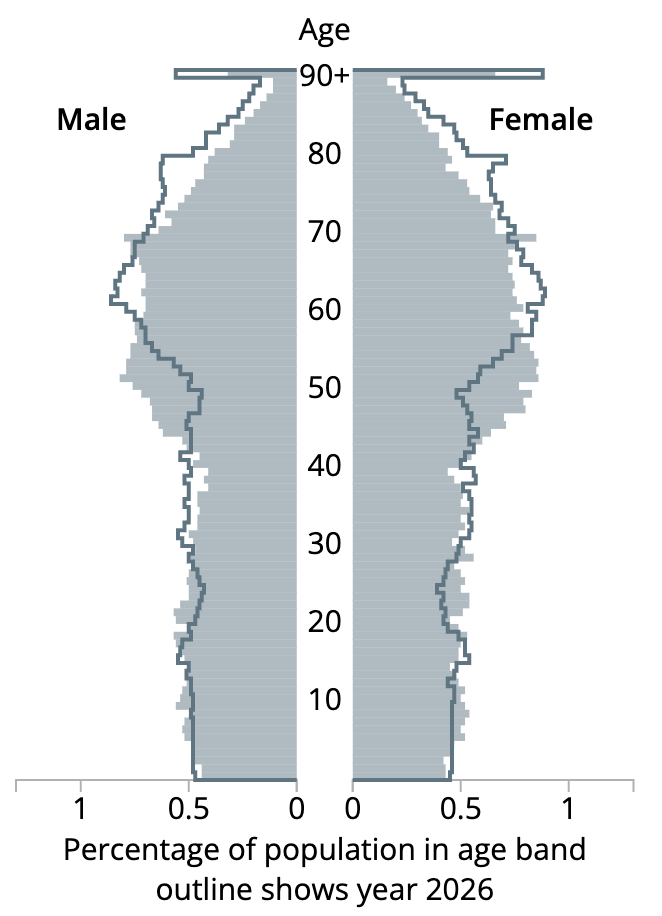
But that’s 1996 data. By viewing the same data for Dumfries and Galloway over time, we can see that the 30-50 year old cohort slowly creep up the stack every 10 years ending in a projection into 2036. This causes the proportion of the population 60 years and older to grow.
How do we serve older populations?
Attract more young people.
It sounds counterintuitive, but the best way to serve an ageing population is to invest in a younger one. Most of the services older people rely on — directly, like social care, and indirectly, like safe walking routes, public transport and community centres — are funded through the local authority. These indirect services are what counter isolation and extend independent living, and they don’t come cheap.
More working-age residents means more full-rate Council Tax, more business rates, and a broader base to spread fixed costs across. An ageing population without younger people moving in means the same costs falling on fewer shoulders.
But young adults are mobile and have options. If Dumfries & Galloway wants to look after its elders, it has to give younger people a reason to choose the region. That means the basics: affordable housing that isn’t competing with holiday lets, broadband that actually supports remote work, decent schools, and a town centre that feels alive in the evening. None of these are luxuries — they’re the conditions under which someone in their thirties, weighing up a move from Glasgow or Manchester, decides Dumfries is a place to build a life rather than just visit. Look after the young, and you look after the old. The two aren’t in competition for the same pot — they depend on each other.
Population data source: Office for National Statistics, Northern Ireland Statistics and Research Agency, National Records of Scotland and Welsh Government
You can get a copy of the Town Board report here.